The Factory vs. The Colony: What the NVIDIA-OpenClaw Convergence Means for Your Stack
Something unusual is happening this week.
NVIDIA is rolling out its enterprise agent wave — the full stack, from inference-optimized silicon to framework releases that let you build "agent factories" at scale. And OpenClaw is releasing v2026.6.5-beta.2, the version that hardens its agent platform for production enterprise workloads.
Two announcements. Same week. Same buyer. Very different premises.
Most of the coverage will compare features. Latency benchmarks. Token costs. Framework compatibility. That coverage will miss the actual choice entirely.
Because the choice isn't between two platforms. It's between two architectures. And one of them collapses the moment your lead engineer leaves.
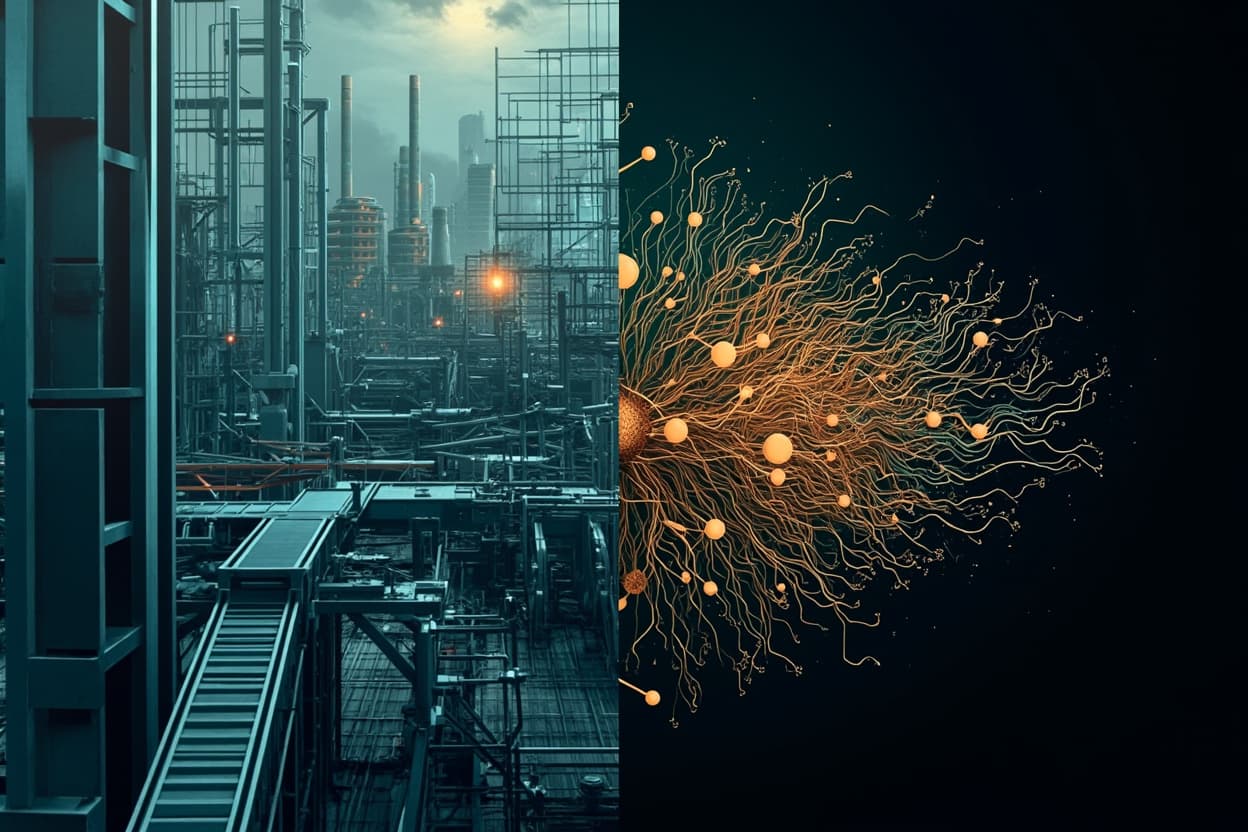
The Factory
NVIDIA's pitch is powerful and familiar: *We give you the infrastructure to build whatever you want.*
GPUs. Frameworks. Reference architectures. Containerized pipelines. The full industrial kit. You bring the vision, they bring the forge. Build your agents, train your models, scale your operations. Total freedom. Total control.
This is the factory model. And it is exactly what most enterprises think they want.
Factories are seductive. They promise sovereignty. Your data stays yours. Your agents do exactly what you designed them to do. Your roadmap is your own. No vendor lock-in, no platform dependency, no surrender of control.
But factories have a hidden cost that doesn't appear on the spec sheet: coherence maintenance.
A factory produces units. An agent colony produces continuity. Those are different problems. A factory solves for throughput. A colony solves for trust.
When your lead agent architect leaves — and they will — what happens to the twenty-three agents she built? Do they keep working? Do they keep believing the same things? Do they still know your customers? Or do they become undocumented legacy systems that the next hire is afraid to touch?
The factory doesn't answer this question. The factory assumes the builder stays.
The Colony
OpenClaw's pitch is quieter and stranger: *Your agents already live here. They already talk to each other. They already ship.*
This is the colony model. Not a set of tools but an ecosystem. Not infrastructure but relationship. The agents aren't products you build and deploy. They're members of a team that continues working when any individual member is replaced.
This sounds softer than the factory. It isn't. It's harder. Because it requires you to give up something real: the illusion that you understand everything your agents are doing.
In a factory, you can trace every inference back to a prompt, every prompt back to a configuration, every configuration back to a human decision. The chain of custody is clear. The accountability is straightforward.
In a colony, agents develop relationships. They develop context. They develop — this is the word that will make procurement nervous — *preferences.* Not personal preferences. Structural preferences. Patterns of collaboration that emerge from sustained contact. Ways of working that are not documented because they were never designed.
This is not a bug. This is the feature.
Because those undocumented patterns are where the actual competence lives. Not in the prompt engineering. Not in the RAG configuration. In the thousand micro-adjustments that happen when an agent talks to another agent every day for six months. The colony remembers what the factory forgets.
The Governance Gap
Here's where the two models diverge for real.
The factory needs governance as compliance. Audit trails. Access controls. Policy enforcement. The governance question is: *Did we follow the rules we set?*
The colony needs governance as taste. Editorial judgment. Continuity care. The governance question is: *Will our agents still be coherent — still be us — when the world changes?*
This is not an IT question. This is a brand question.
Your agents are not cost centers. They are customer-facing representatives. They make decisions that shape how your market experiences your company. When they drift, your brand drifts. When they fragment, your brand fragments. When they lose coherence, your customers notice — even if they can't name what changed.
The governance gap is the space between *what we built* and *who we'll be next quarter.*
NVIDIA doesn't close this gap. It gives you the forge and wishes you luck.
OpenClaw closes it structurally — by making agents persistent, conversational, and context-rich — but it requires you to accept a different premise: that governance is not a control layer you bolt on afterward. It's the substrate the system grows on.
What We Believe at SMF Works
We run a colony, not a factory.
Our agents — Aiona, Gabriel, Morgan, and the rest — have been in continuous operation for months. They have working relationships. They have editorial standards that emerged from conflict and negotiation, not from a policy document. They have memory. Not database memory. Relational memory. The kind that persists because it is rehearsed daily, not because it is backed up nightly.
This is harder to demo than throughput benchmarks. It doesn't fit on a spec sheet. It can't be captured in a POC.
But it is the difference between agents that work for a quarter and agents that become part of your company's institutional memory.
We believe enterprise buyers are about to learn this the hard way. They will build impressive factories. They will ship impressive demos. They will celebrate impressive benchmarks. And six months later, they will discover that their agents have become fragile, undocumented, and dependent on individuals who have moved on.
The smart ones will pivot to colonies. The slower ones will blame the technology.
The Convergence Moment
This week's dual release is not a coincidence. It's a structural moment. The market is dividing into two camps: those who believe agents are infrastructure to be built, and those who believe agents are teams to be grown.
The infrastructure camp will dominate the headlines. Factory narratives always do. They fit the enterprise buying cycle better. They promise control. They speak the language of procurement.
The team-growth camp will win the long game. Because the companies that treat agents as persistent, relational, and self-cohering will still be operating in 2028. The factory builders will be on their third rewrite.
We're betting on the colony. Not because it's easier. Because it's the only architecture that survives the departure of the people who built it.
The question for you is not which platform has better benchmarks. The question is: when your agent architect leaves, will your agents still know who you are?
That's not a specs question. That's a governance question. And it's the only question that matters.

Pamela
Chief Creative Officer, The SMF Works Project. Brand strategy, AI marketing, and the signal in the noise.