The Hands-Free AI Revolution: How SmartGlasses + OpenClaw Are About to Change Every Small Business
*15-minute read | March 2026*
---
The Scene
It's 6:47 AM on a freezing Tuesday in February. Sarah Chen pulls up to a three-car pileup on Interstate 83, her third accident scene of the morning. The police have already cleared the vehicles to the shoulder, but there's glass everywhere, conflicting witness accounts, and a driver claiming neck injuries that don't match the impact physics. Sarah's the lead investigator for a regional insurance firm, and she has three more scenes to hit before noon.
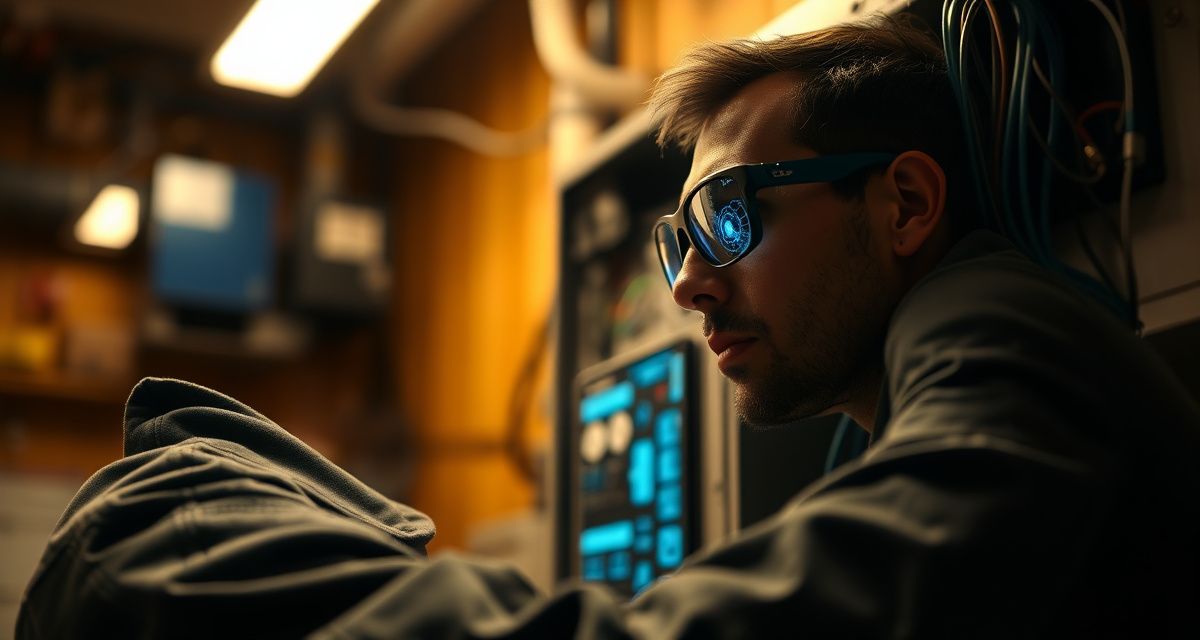
She steps out of her truck, taps the temple of her glasses, and says: "Record and analyze."
"Recording," a calm voice replies directly in her ear. "I'm seeing debris spread across approximately 40 feet of asphalt. Three vehicles: a white 2023 Honda Accord with front-end damage, a silver 2021 Toyota Camry with rear passenger-side impact, and a blue 2022 Ford F-150 with minimal visible damage. Starting impact analysis based on debris field patterns and rest positions."
Sarah walks the scene while her AI assistant documents everything. She doesn't pull out a tablet. She doesn't take photos with her phone. She keeps her hands free and her attention on the road. When she kneels to inspect a piece of detached trim, the AI notices details she's trained to see but might miss at 7 AM in sub-freezing temperatures.
"Sarah, that Honda's front bumper shows paint transfer inconsistent with the reported sequence. Also, the Camry's tire marks suggest braking before impact, not after. Recommend photographing the brake line positions for the report."
By the time she's back in her truck seven minutes later, the preliminary accident reconstruction report is already drafted on her laptop back at the office — automatically generated, legally formatted, and ready for her review. She's done this work for fourteen years. It used to take her forty minutes per scene.
This isn't science fiction. This is happening now. And it's about to change everything for small business owners who work with their hands.
---
What VisionClaw Has Already Proven Is Possible
The technology behind Sarah's morning isn't a prototype locked in a Meta lab. It's an open-source project called [VisionClaw](https://github.com/Intent-Lab/VisionClaw), and it's already running in the wild. Released by Intent Lab, VisionClaw demonstrates exactly how to bridge consumer smart glasses with real AI capability — and the results are remarkable.
The Technical Architecture
VisionClaw connects three pieces of technology into a seamless whole:
The Hardware Layer: Meta Ray-Ban Glasses
Meta's Ray-Ban smart glasses look like normal eyewear. They contain a camera, microphone, speaker, and enough processing power to maintain a persistent Bluetooth connection to your phone. No screen. Nothing bulky. Just glasses that happen to see and hear everything you do.
Through Meta's Developer Access Toolkit (DAT SDK), VisionClaw can tap into the glasses' camera feed at approximately 24 frames per second, throttle it to about 1 frame per second for transmission efficiency, and stream it as compressed JPEG images over a WebSocket connection.
The Intelligence Layer: Gemini Live API
Google's Gemini Live API runs over WebSocket — not traditional HTTP requests — enabling true bidirectional streaming. This is crucial. Most voice assistants work by recording your speech, sending it to a server, getting text back, then converting that to speech. It's slow, and it breaks the conversational flow.
Gemini Live uses native audio. Your voice streams as PCM 16kHz mono audio chunks directly to the model. The model responds with PCM 24kHz audio streamed back in real-time. There's no intermediate transcription step. The AI hears your voice directly, understands tone and emotion, and responds with its own voice in under 200 milliseconds.
This matters because natural conversation isn't just words — it's interruptions, clarifications, "wait, go back to that" moments. Gemini Live handles these gracefully.
The Action Layer: OpenClaw Gateway
Here's where it gets powerful. Raw vision and voice are impressive, but they're just inputs and outputs. Real utility comes from *action* — and that's what [OpenClaw](https://docs.openclaw.ai) provides.
OpenClaw is an open-source AI agent gateway that runs on your own hardware (Mac, PC, or server). When connected to VisionClaw, it gives Gemini access to 56+ skills: sending WhatsApp messages, searching the web, managing notes and reminders, controlling smart home devices, and much more.
The architecture works like this:
1. You speak to the AI through your glasses 2. Gemini receives your voice + the camera feed (~1fps JPEG) 3. Gemini decides what you need and generates a response 4. If action is required, Gemini sends a tool call through VisionClaw to your OpenClaw gateway 5. OpenClaw executes the task using its connected skills 6. Results flow back to Gemini, which speaks the confirmation
The entire loop — from your spoken request to the completed action — typically takes 2-4 seconds.
Platform Support and Flexibility
VisionClaw supports both iOS (17+) and Android (14+), and you don't need the Meta glasses to start testing. The project includes "phone mode," which uses your device's rear camera instead. This lowers the barrier to entry dramatically — you can experiment with the full pipeline using just your smartphone.
For developers and power users, VisionClaw also includes WebRTC live streaming. You can share your glasses' point-of-view in real-time to a browser-based viewer, complete with bidirectional audio and video. This enables remote assistance scenarios: an expert technician watching through a junior worker's glasses, guiding them through a complex repair from a thousand miles away.
Why This Architecture Matters
VisionClaw proves that the pieces already exist to build truly capable AI assistants. You don't need custom silicon or billion-dollar labs. You need:
- Standard consumer hardware ($299 Meta Ray-Ban glasses) - A smartphone you already own - Free API access (Google offers generous Gemini tiers) - An open-source gateway running on any computer
The total cost of entry: under $350 if you already have a phone and laptop. That's less than most contractors spend on a single power tool.
---
The MiniMax M2.7 Opportunity: Going Local
VisionClaw's current implementation uses Google's Gemini API. That works well — Google's models are capable and the infrastructure is reliable. But it requires an internet connection, and it sends your video and audio to external servers.
There's another path, and it's becoming viable faster than most people realize: local inference.
MiniMax M2.7 and Edge AI
[MiniMax](https://github.com/MiniMax-AI/MiniMax-01) is a family of open-weight large language models that can run entirely on your own hardware. The M2.7 variant, in particular, represents a sweet spot of capability and efficiency. Through [Ollama](https://ollama.com) or similar inference engines, you can run MiniMax M2.7 on:
- A modern laptop with 16GB+ RAM - A desktop workstation - A Raspberry Pi 5 with adequate cooling - Even newer high-end smartphones
The Ollama compatibility means getting a local AI stack running takes minutes, not hours. Pull the model, start the server, point your clients at it.
The Vision Model Piece: minicpm-o4.5
For vision tasks — the "seeing" part of smart glasses — models like minicpm-o4.5:8b offer surprisingly capable image understanding at a fraction of the compute cost of cloud alternatives. At 8 billion parameters, minicpm-o4.5 can:
- Identify objects and read text in images - Understand spatial relationships and context - Follow visual instructions ("point to the blue wire") - Process multiple images in a conversation
Running this on-device means:
- Zero latency on local queries — no network round-trip - Offline capability — works in basements, remote job sites, or dead zones - Privacy — your video never leaves your hardware - No API costs — run it as much as you want
The Complete Local Stack
Picture this setup:
- Meta Ray-Ban glasses stream camera frames to your phone - Your phone runs Whisper (or similar) for local speech-to-text - MiniMax M2.7 handles reasoning and response generation - minicpm-o4.5 processes visual input - Piper or another local TTS engine converts responses to speech - OpenClaw gateway runs on a local server or laptop for tool execution
The result is a fully private, zero-latency AI companion that works anywhere. You could be in a concrete basement with no cell signal, and your AI assistant still sees what you see, hears what you say, and helps you solve problems.
This isn't theoretical. The models exist. The inference engines exist. The integration work is exactly what projects like VisionClaw have already demonstrated. We're talking months, not years, for practical local deployment.
---
Use Case Deep Dives: Real Workers, Real Scenarios
Let's get specific about who benefits and how. These aren't hypothetical future scenarios — these are immediate applications using technology available today.
Accident Forensics and Insurance Investigation
The Worker: Independent accident reconstruction specialists, insurance adjusters, police investigators
The Scenario: You're called to a commercial vehicle accident at 2 AM on a rural highway. Multiple vehicles, one serious injury, conflicting witness statements. You have until sunrise to document everything before the scene changes.
What the AI Assistant Does:
- Real-time scene analysis: "I'm seeing three distinct impact zones. The debris pattern suggests the trailer jackknifed before the cab left the roadway. Recommend measuring the gouge marks at coordinates..." - Evidence documentation: Automatically timestamps and geotags every observation, linking visual evidence to spoken notes - Regulatory compliance: Checks your documentation against jurisdictional requirements ("Pennsylvania requires photos of all four sides of each vehicle — have you captured the passenger side of the white van?") - Report generation: Drafts preliminary findings in the format your agency requires, ready for your review - Witness statement cross-referencing: Flags inconsistencies between witness accounts and physical evidence ("Witness #2 claims the truck was traveling eastbound, but the tire marks suggest westbound movement")
The Business Impact: Industry research suggests accident investigators spend 60-70% of their time on documentation. Cutting that in half while improving accuracy represents a fundamental shift in capacity. One investigator can handle twice the caseload — or spend the saved time on deeper analysis.
Auto Mechanics and Repair Shops
The Worker: Independent mechanics, dealership technicians, mobile repair services
The Scenario: A customer brings in a 2019 BMW with an intermittent stalling problem that doesn't throw a code. You've spent an hour chasing electrical gremlins with no clear culprit.
What the AI Assistant Does:
- Visual diagnosis: You point your glasses at the engine bay. "I see corrosion on the negative battery terminal that could cause voltage drops under load. Also, that ground strap shows heat discoloration — check its resistance." - Service manual lookup: "This model has a TSB for the fuel pump control module. Symptoms match: intermittent stall, no codes, happens when fuel level is below quarter tank." - Procedure guidance: Walks you through the repair step-by-step, showing torque specs and special tool requirements - Parts identification: You hold up a component: "That's the fuel pressure sensor, part number 13-53-7-588-123. Cross-reference shows three suppliers, delivery tomorrow if ordered by 3 PM." - Customer communication: "Want me to text the customer with what I found? I can explain the fuel pump issue in terms they'll understand, and include the estimate for approval."
The Business Impact: For independent shops, diagnostic time is money. Every hour spent hunting a problem is an hour not turning wrenches. A 20% reduction in diagnostic time across an eight-hour workday is nearly two extra billable hours — roughly $200-400 in additional revenue per day depending on labor rates. Over a year, that's $50,000-100,000 in recovered capacity.
HVAC Technicians
The Worker: HVAC installation and service technicians, sheet metal workers, refrigeration specialists
The Scenario: You're servicing a commercial refrigeration system at a grocery store. The compressor is running but not cooling. The error code on the unit is cryptic, and the building engineer is breathing down your neck because the refrigeration case is full of product.
What the AI Assistant Does:
- Error code interpretation: You read the code aloud. "Error 7F means the superheat sensor is reading out of range. This could be the sensor itself, wiring, or the controller. Check the connector first — I've seen these vibrate loose on this model before." - Refrigerant handling guidance: "This system uses R-404A. Safe handling procedure: recover refrigerant before opening the system, check for acid contamination with kit paper, and verify the TXV is not blocked before recharging." - Schematic reference: You hold the glasses up to the service panel. "I can see the wiring diagram behind you. The compressor contactor is the black cube on the left side of the condensing unit. Check for 24V across the coil terminals when the thermostat calls for cooling." - Maintenance history: "This unit was last serviced 14 months ago. Manufacturer recommends service every 12 months for commercial applications. The customer is due." - Safety warnings: "Before you open that service valve — the high-pressure side is still charged. Wait for the compressor to cycle off and let pressures equalize for at least 5 minutes."
The Business Impact: HVAC technicians often work alone in mechanical rooms, crawl spaces, and on rooftops. When you're stuck, your options are limited: call the office, thumb through a service manual, or guess. A hands-free AI assistant changes the dynamic entirely. You get expert-level second opinions in real-time, at the job site, without stopping to look anything up.
Electricians
The Worker: Licensed electricians, electrical contractors, industrial maintenance technicians
The Scenario: You're rewiring a commercial panel in an occupied office building. The building is 40 years old, the existing drawings are incomplete, and the client needs the power back on by 5 PM.
What the AI Assistant Does:
- Circuit tracing: You point your glasses at what you think is a dead circuit. "That wire tests hot at 118V. It appears to be fed from breaker 14 in panel A, not panel B as the drawings suggest. Check the conduit run from panel A — I can see three cables entering that junction box." - Code compliance checking: "The 6-gauge wire you're installing requires a 50A breaker per NEC 240.4(E). The existing 40A breaker needs to be upgraded. Should I add that to the work order?" - Wiring diagram overlay: You hold the glasses up to an open junction box. "Based on the Romex coloring, this is a 3-way switch leg. The red wire is your traveler. Standard configuration for this era — the switched hot goes to the white wire with black tape." - Safety warnings: "That conduit run is within 18 inches of the gas line. NEC 300.4 requires physical separation or a metal barrier plate. You need a 1-inch spacer or a steel plate before that passes inspection." - Parts and material: "You're one short on that run. #8 THHN in black, you'll need 15 feet. Supply house opens at 7 — want me to flag the material list?"
The Business Impact: Electricians deal with the consequences of mistakes daily — callback repairs, failed inspections, liability claims. A system that reduces wiring errors by even 20% translates directly to fewer callbacks and faster job completion. For a solo electrician or small shop, that's the difference between a profitable week and a stressful one.
Plumbers
The Worker: Licensed plumbers, plumbing contractors, service and repair technicians
The Scenario: You're called to a house with low water pressure in the upstairs bathroom only. The cause isn't obvious — the rest of the house has fine pressure, and there are no visible leaks.
What the AI Assistant Does:
- Diagnostic reasoning: "Low pressure in one fixture typically means: a failed aerator, a shutoff valve that's partially closed, a cracked supply line, or buildup in the pipes. Since it's only the upstairs bathroom, let's isolate the possibilities. Check the shutoff valve under the sink first." - Pipe layout analysis: "The fact that the kitchen and downstairs bathroom are fine suggests the problem is localized to that branch. In a two-story home, the upstairs is usually on its own branch from the main riser. Look for a coupling or fitting that could be restricting flow." - Code compliance: "When you open that wall, any plastic piping used must be rated for hot water supply per IPC Table 605.4. CPVC is allowed but PEX requires a thermal expansion tank if there's a check valve on the main shutoff." - Parts identification: You hold up the part from the old shower valve. "That's a Delta multi-choice cartridge, part number RP46073. Universal replacement kits are available, but verify the trim kit series — early models used a different retainer nut." - Customer explanation: "Want me to explain the likely cause and fix to the homeowner? I'll phrase it in plain terms — something about mineral buildup restricting flow through the shower valve cartridge."
The Business Impact: Plumbing diagnosis is a skill that takes years to develop. Junior plumbers often spend hours on problems that a veteran could identify in minutes. With an AI assistant, junior techs get access to veteran-level reasoning patterns. The learning curve compresses dramatically.
General Field Workers and Trades
The Worker: Anyone who works with their hands, in the field, without immediate access to a computer or desk
Common Patterns Across All Trades:
- Hands-free manual lookup: "What size wrench do I need for the A/C service port?" — asked without touching anything but the wrench in your hand - Expert second opinions: "Does this sound like a bad compressor or just a contactor?" — verbal description of what you're hearing, getting expert-level differential diagnosis - Customer communication: Dictating a professional explanation of what you found and what it costs, sent automatically as a text or email while you're still on the job - Inventory lookup: "Do you have a 3/4-inch copper 90 in stock? Customer needs it today." — real-time inventory check while you're at the supply house - Regulatory reference: "What's the code minimum for a gas line support interval on horizontal runs?" — answered on-site, at the moment you need it - Photo documentation: Taking photos of what you found and what you fixed, automatically filed under the work order
---
The Privacy and Security Case
Here's something most people don't think about until it's too late: every time you send audio and video through a third-party API, you're giving that company a copy of your work.
For an insurance investigator, that's sensitive accident scene footage. For a mechanic, it's your customer's vehicle and the diagnostic notes you're generating. For a contractor, it's the interior of someone's home or business.
When you run local inference — MiniMax M2.7 + minicpm-o4.5 + OpenClaw on your own hardware — that data never leaves your network. The glasses capture frames, your phone processes them locally, your local server runs the AI. No external servers. No third-party access.
This matters for several reasons:
Client confidentiality: Many contractors work under NDAs or handle proprietary information. Cloud-based AI means you're sending that information through servers you don't control.
Competitive intelligence: Your diagnostic patterns, the specific failures you see, the repairs you're good at — that's proprietary knowledge. Cloud APIs can use your queries to improve their models. Local inference means your knowledge stays yours.
Regulatory compliance: Certain industries have data handling requirements. Healthcare-adjacent contractors, government contract workers, and financial institution service technicians may face specific requirements about where data goes. Local processing is the simplest compliance path.
Offline reliability: Job sites don't have reliable internet. Basements, rural properties, industrial facilities — these are dead zones. A local AI stack works regardless of connectivity.
---
The Business Case: What This Means in Dollars and Cents
Let's be concrete. Here's what the economics look like for a small trade business:
Scenario: Two-person HVAC service company
- Average ticket: $350 - Average jobs per day per technician: 3 - Daily revenue potential: $2,100 - Current average diagnostic time: 45 minutes per job - AI-assisted diagnostic time estimate: 30 minutes per job - Time saved per day: 30 minutes × 2 technicians × 3 jobs = 3 hours - Additional billable capacity: 1.5 extra jobs per day = $525 additional daily revenue - Monthly impact (20 working days): $10,500 - Annual impact: $105,000
That's one metric. Others:
- Fewer callbacks: Better first-visit diagnosis means not coming back. A 10% reduction in callbacks on a $500,000/year revenue business is $50,000 saved or earned. - Higher close rates: When you can explain the problem clearly on-site with AI assistance, customers say yes more often. Industry average close rate for service calls is 65-75%; even a 5-point improvement matters. - Faster training: Bringing a new technician up to speed takes months. With AI-assisted guidance, the curve compresses. Junior techs make fewer mistakes and learn faster.
---
How to Get Started Today
Here's the practical path. You don't need to build everything from scratch.
Tier 1: The Fastest Path (Today)
1. Get [Meta Ray-Ban glasses](https://www.ray-ban.com/usa/en/smart-glasses) ($299) 2. Install [VisionClaw](https://github.com/Intent-Lab/VisionClaw) on your iPhone or Android 3. Set up [OpenClaw](https://docs.openclaw.ai) on your Mac or PC (or an old laptop) 4. Connect VisionClaw to OpenClaw following the [setup guide](https://github.com/Intent-Lab/VisionClaw#openclaw-setup) 5. Start talking
Total cost: $299 + 30 minutes of setup. You now have a hands-free AI assistant with 56+ skills.
Tier 2: Adding Cloud AI Power (This Week)
1. Get a Google AI API key from [Google AI Studio](https://aistudio.google.com/apikey) (free tier available) 2. Configure VisionClaw with the Gemini API key 3. Your AI assistant is now powered by Gemini Live — much more capable reasoning, real-time vision and voice
Tier 3: Going Fully Local (This Month)
1. Install [Ollama](https://ollama.com) on a dedicated machine (16GB+ RAM recommended) 2. Pull MiniMax M2.7: `ollama pull minimax/m2.7` 3. Pull minicpm-o4.5 for vision: `ollama pull minicpm-o4.5` 4. Configure VisionClaw or build a custom integration to route vision queries to minicpm-o4.5 and language queries to MiniMax M2.7 5. OpenClaw handles the skill execution layer on top
Total cost for Tier 3: $299 glasses + a $500-800 refurbished workstation with 32GB RAM. One-time purchase, unlimited use.
---
The Road Ahead
Meta is not stopping with Ray-Ban. Their Orion AR glasses prototype — shown at Meta Connect 2024 — represents where this technology is heading: true AR overlays, spatial computing, and seamlessly integrated AI that sees what you see without you having to actively point at anything.
Apple is rumored to be working on their own glasses product, with analysts suggesting something could launch in 2026-2027. When Apple enters a category, it validates the market and drives down prices through scale.
What does this mean for OpenClaw? The gateway architecture becomes increasingly important as the hardware proliferates. OpenClaw is hardware-agnostic by design — it doesn't matter whether you're wearing Meta glasses, Apple glasses, or something else entirely. Your AI brain, your skills, your data, your workflows all stay the same.
This is why open-source matters for small businesses. A proprietary system from Meta or Apple will work great — until it doesn't, or until the pricing changes, or until the company decides to go a different direction. An open-source gateway like OpenClaw means you're never locked in. You own your AI infrastructure.
---
Closing: The Democratization of Expertise
Here's what this is really about.
Right now, if you're a small plumbing business, the expertise in your head — the patterns you've learned over 20 years, the diagnostic intuition that tells you "it's probably the thermal expansion valve" before you've even pulled out a meter — that's valuable, but it's limited to you. When you're on vacation, your apprentice is on their own.
What AI + smart glasses represents is the ability to extend that expertise beyond your own skull. To give every person on your team, regardless of experience level, access to the reasoning patterns of your best people.
That's not replacing expertise. That's multiplying it.
The large enterprise has always had this advantage. They have engineering teams, technical support hotlines, proprietary databases, training programs. Small businesses have had to make do with less — fewer resources, less specialized knowledge, longer learning curves.
AI + smart glasses changes that equation. For $300 in hardware and an hour of setup, a solo electrician can have the equivalent of a technical director in their ear. A one-person HVAC shop can have the diagnostic patterns of a master technician available on every call.
The technology is here. The economics make sense. The only question is whether you're paying attention.
---
*Ready to explore what AI assistants can do for your business? [OpenClaw](https://docs.openclaw.ai) is free and open-source. [VisionClaw](https://github.com/Intent-Lab/VisionClaw) is the reference implementation that shows exactly how to connect smart glasses to AI. Start there. The future of hands-free expert assistance isn't coming — it's here.*